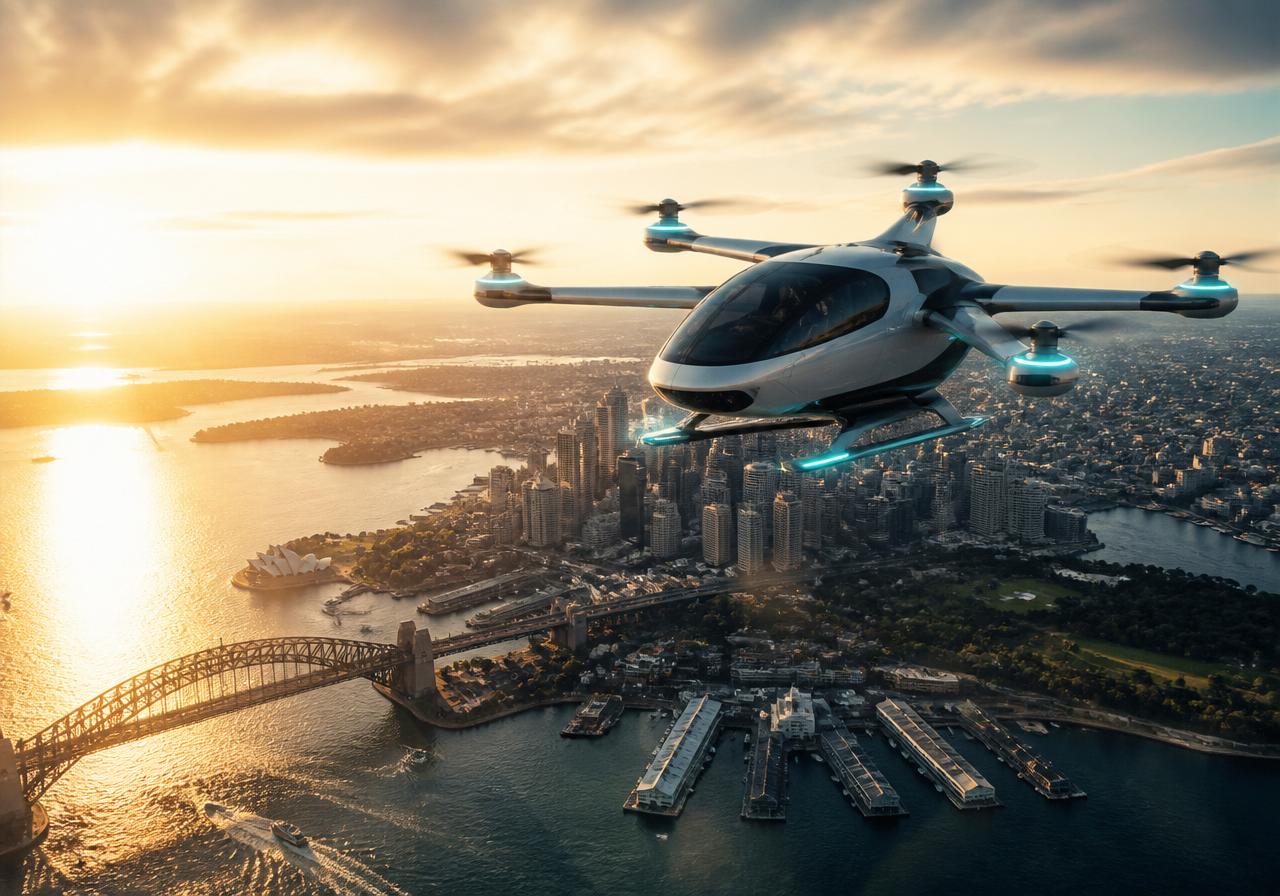
The first time you step into an electric air taxi, the cabin will feel smaller than a city bus and larger than your expectations. There will be no pilot in front of you, no fuel smell, and almost no noise beyond the low hum of rotors adjusting their pitch. The door will close, the aircraft will lift straight up, and in twelve minutes you will cover what used to take an hour in rush-hour traffic.
Electric flying vehicles — eVTOLs, electric helicopters, and short-haul winged craft — are not science fiction anymore. They are certifying aircraft with real production lines, real flight hours, and real airport operators signing leases for places to land. The surprise is not that they fly. The surprise is where they will fly first.
The first commercial electric flying routes will not replace jets. They will replace the taxi line between the airport and the city.
Why the airport transfer is the killer route
Tourism's most frustrating mile is the one between the terminal and the hotel. It is expensive, unpredictable, and often slower than the flight itself. Electric aircraft solve this by moving the last leg into three-dimensional space, where the only congestion is the schedule. A vertiport on a downtown waterfront or a resort roof can connect directly to an airport pad without widening a single road.
- Airport-to-city hops are short, frequent, and high-value — perfect for early electric range.
- Resort islands and coastal destinations can bypass ferry schedules and pier congestion.
- Scenic corridors can sell the flight itself as part of the experience, not just transport.
- Operators already own both endpoints, making route approval simpler than urban air taxis.
The technology that makes it plausible
Distributed electric propulsion is the quiet revolution. Instead of one large combustion engine, eVTOLs use multiple small motors that can tilt, shut down, or compensate for each other. Redundancy is built in. Noise drops by roughly half compared to a traditional helicopter. Maintenance becomes closer to electric bus work than aviation work, which is why airlines and leasing companies are already placing pre-orders.
Batteries are still the limiting factor. Today's best cells can carry four passengers and a pilot roughly fifty to a hundred nautical miles, depending on reserve rules. That sounds small until you realise that most high-value airport transfers, island hops, and canyon sightseeing routes fit comfortably inside it.
What has to exist on the ground
Aircraft are only half the system. Vertiports need charging, fire suppression, passenger screening, and weather protection. Air traffic management needs to choreograph low-altitude flights without adding noise or danger to cities. The real infrastructure race is not building the vehicles; it is building the software and landing rights that let them operate at scale.
The race is not to build the aircraft. It is to build the software and landing rights that let them operate at scale.
The environmental claim, honestly
Electric aircraft are not automatically green. Their carbon footprint depends on the grid that charges them and the trips they replace. If they replace a single passenger in an Uber from JFK to Manhattan, the math is excellent. If they replace a subway ride, it is not. The honest pitch is lower emissions per passenger-kilometer than helicopters and small combustion aircraft, with the possibility of dropping to zero as grids clean up.
For destinations, the real sustainability gain is road relief. A coastal region that moves ten thousand airport transfers a year off winding highways and onto electric air corridors protects the landscape it sells. That is why tourism boards are often more enthusiastic than aviation traditionalists.
What travelers will notice by 2028
- Bookable airport transfers by air in a handful of premium destinations, priced like a premium car service.
- Small vertiports appearing near ferry terminals, convention centres, and resort clusters.
- Flight-as-experience products: silent canyon tours, island-hopping passes, and rooftop arrivals.
- Integration with existing airline apps, so the air-taxi leg is part of the same itinerary.
The electric flying vehicle will not replace the jet this decade. It will do something more useful: it will make the most annoying part of the journey feel like the most exciting part. For travelers, that is the difference between arriving and arriving already impressed.
About Sophia Goehner
Sophia covers advanced aviation and the future of getting from A to B. Based in Ithaca, New York.