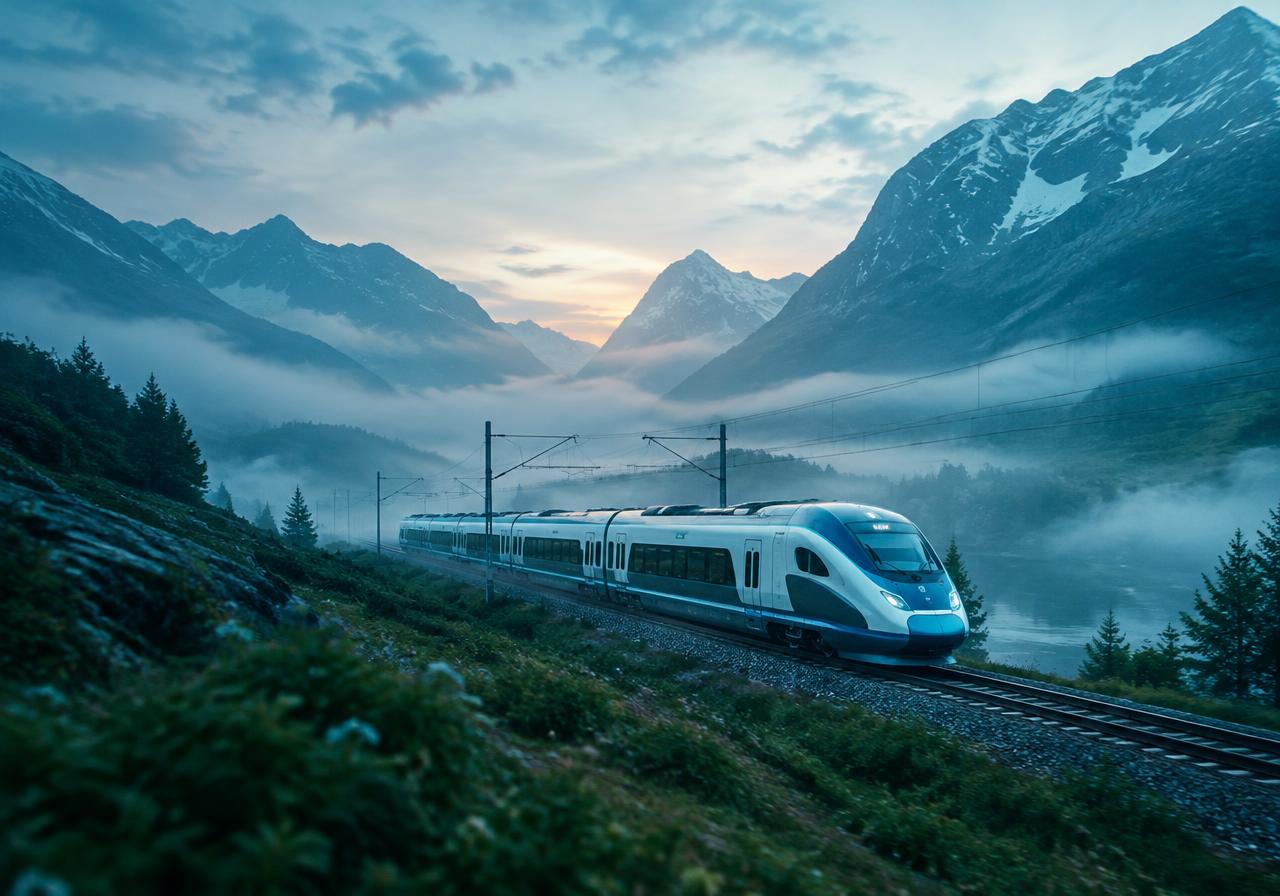
For decades, the story of travel was a story of flying further, faster and cheaper. Rail was the charming option — fine for a weekend, rarely the default. That is changing. Across Europe and Asia, and increasingly in North America, overnight sleeper services are returning, rural diesel lines are being converted to hydrogen and battery-electric trains, and digital tools are making multi-operator rail trips almost as easy to book as a flight.
The result is a quiet renaissance. Not a single breakthrough, but a stack of improvements — cleaner trains, better booking, smarter stations — that together make the train a genuine competitor for trips under roughly 1,000 kilometers, and an attraction in its own right for longer ones.
The fastest way between two cities is not always the one travelers remember. The train is selling the journey, not just the arrival.
The comeback of the night train
Sleeper trains turn transport time into accommodation time. Board after dinner, wake up in another country, skip both the airport and a hotel night. Operators have been relaunching routes that were cancelled a generation ago, and new private operators are testing premium cabins aimed squarely at travelers who want lower emissions without giving up comfort.
- Time value: an overnight journey replaces a travel day and a hotel night.
- City-center to city-center: no security lines or long airport transfers.
- Carbon: rail typically produces a fraction of the emissions of a short-haul flight per passenger.
- Experience: the trip itself becomes something to share, photograph and plan around.
Hydrogen and battery trains reach the branch lines
Many of the most scenic rail routes — mountain valleys, coastal lines, rural branches — were never electrified because stringing overhead wires across them was too expensive. Those lines have run on diesel. Hydrogen fuel-cell trains and battery-electric trains that recharge on short electrified sections are changing that, bringing quiet, zero-exhaust service to exactly the landscapes tourists come to see.
The technology is not without growing pains. Green hydrogen supply is still limited and costly, and some early operators have favored battery trains where distances allow. But the direction is clear: the diesel rumble through the national park is on its way out.
Software is the missing rail
The biggest barrier to rail travel has often been booking, not trains. A trip across three countries could mean three websites, three currencies and no protection if a connection is missed. Aggregators, open ticketing standards and AI travel assistants are knitting those systems together. A traveler can increasingly ask for 'Paris to Vienna overnight, arriving before 9am' and get a single, bookable answer — with rebooking handled automatically if a delay hits.
Connectivity matters on board too. Better onboard networks, and eventually 6G-grade coverage along corridors, make the train a workable office — one of the strongest arguments for choosing rail over a short flight.
Rail's real competitor was never the plane. It was friction.
What it means for destinations
Rail spreads tourism differently than airports do. Visitors arriving by train stop in the towns along the line, not just the hub city. That can help ease overtourism in famous centers and bring spending to smaller communities — if those communities are ready with last-mile options like e-bikes, on-demand shuttles and clear walking routes from the station.
- Promote rail-first itineraries that link several smaller stops.
- Coordinate last-mile transport with train arrival times.
- Treat the station as the front door of the destination, not an afterthought.
- Package the journey itself — scenic routes and sleepers are attractions.
The bottom line
The rail renaissance won't replace flying for long distances. But for a growing share of trips, the train is becoming the smarter, calmer and cleaner choice — and, for tourism, a way to make the journey part of the story again.
About Sophia Goehner
Sophia writes about the technology quietly rewiring how we move and where we go. Based in Ithaca, New York.