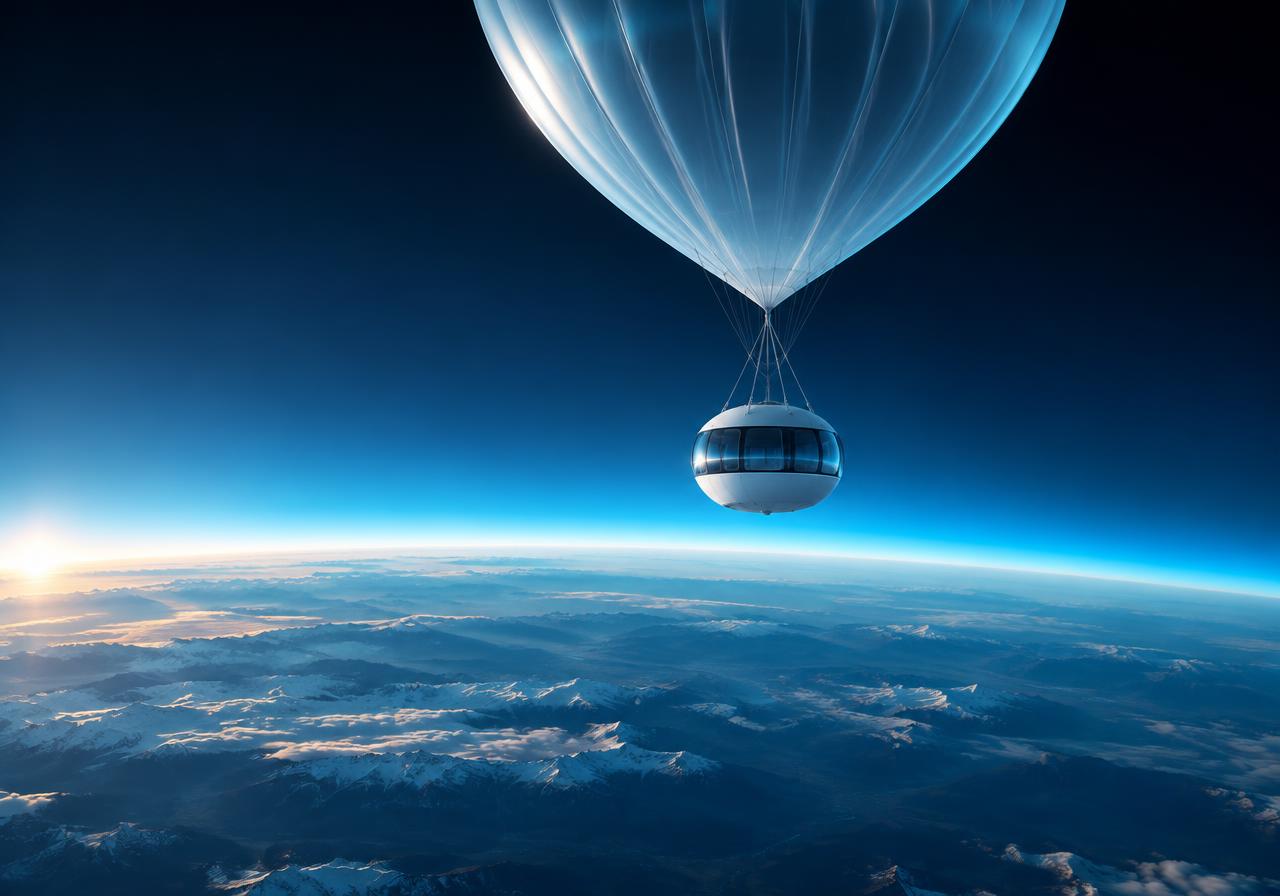
Space tourism has so far meant one of two things: a violent rocket ride lasting minutes, or a lottery-ticket price tag measured in tens of millions. A third option has been quietly maturing in hangars in Florida and the south of France — a pressurized capsule lifted not by engines but by an enormous helium balloon, drifting straight up to around thirty kilometers, where the sky turns black and the curvature of the Earth becomes visible to the naked eye.
The pitch is deceptively simple. No astronaut training, no g-forces, no spacesuit. You board a capsule the size of a small studio apartment with seven other passengers, rise for about two hours while sipping a drink at a bar-height window, spend an hour or two floating above ninety-nine percent of the atmosphere, then glide back down for a soft landing. It is less a launch and more the world's slowest, highest elevator — with the best view on the planet.
The rocket sells speed. The balloon sells stillness — the same view, arrived at gently.
How a balloon reaches the edge of space
The capsule hangs beneath a balloon that, at altitude, expands to the size of a football stadium. Helium provides the lift; a trajectory system keeps the ascent slow and drifts the capsule downrange a few hundred kilometers before descent. Because the capsule is pressurized, passengers wear ordinary clothing. And because there is no combustion, no supersonic flight and no abort-to-ocean, the regulatory path looks more like aviation certification than rocketry — which is precisely why operators argue the experience can be repeated weekly, safely, at a price measured in tens of thousands of dollars rather than millions.
- Altitude: roughly 30 kilometers, above 99% of the atmosphere — the same darkness astronauts describe.
- Duration: six to eight hours door to door, versus several days of training for suborbital rocket flights.
- Comfort: pressurized cabin, seated lounges, no g-forces, no nausea-inducing acrobatics.
- Price target: between roughly $50,000 and $200,000 a seat — expensive, but no longer billionaire-only.
Why this matters to tourism, not just spaceflight
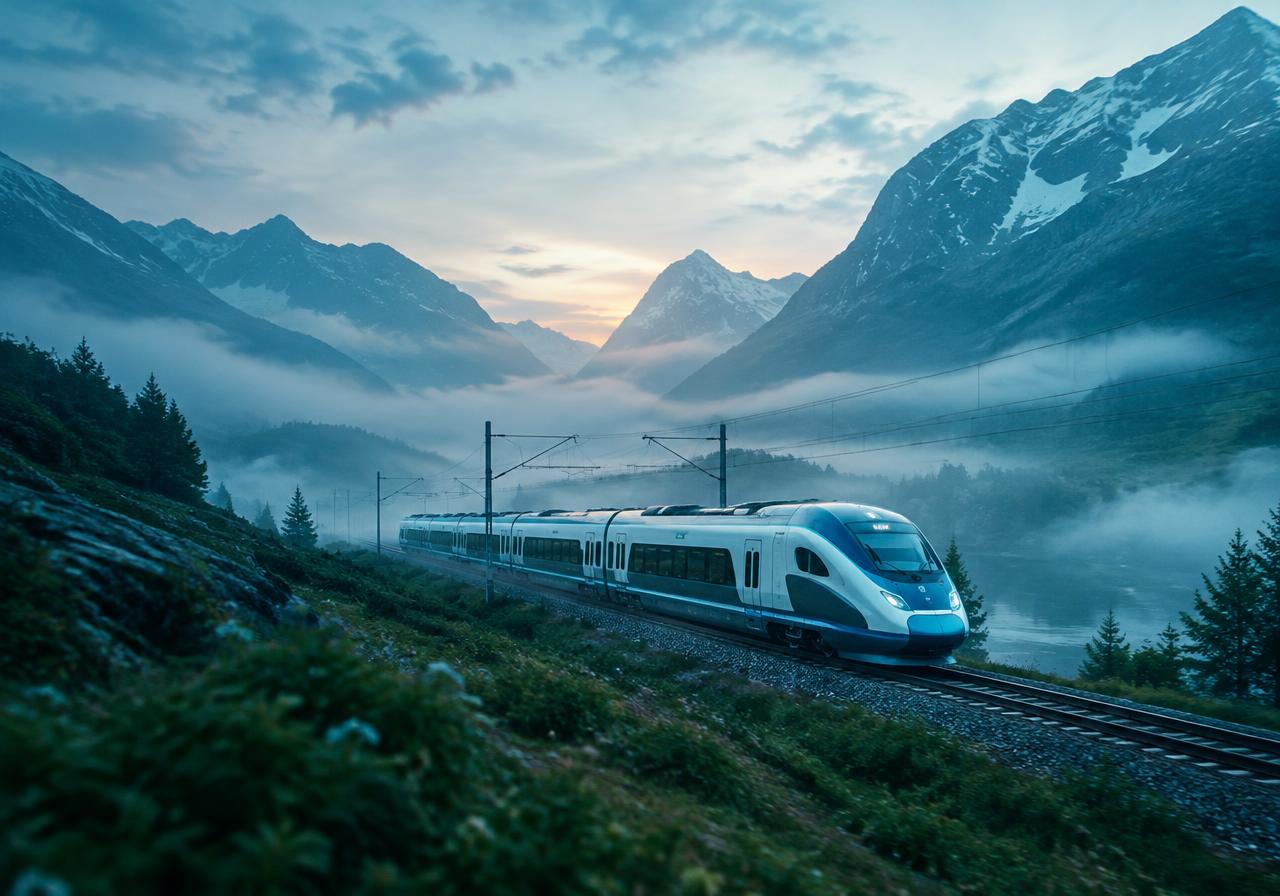
High-end adventure travel already supports products most people will never buy — heli-skiing, private submarine dives, polar expeditions — because they pull aspiration down through the market. Stratospheric balloons fit that mold. They create a new top tier of 'Earth observation tourism,' and everything beneath it repositions: the mountain heli-tour, the scenic flight over Antarctica, the luxury rail cabin through the Alps. Destinations near launch sites suddenly inherit a piece of the space economy without building a spaceport for orbital vehicles.
The operators have noticed. Launch sites are being sited the way ski resorts once were — for weather, scenery and access — in places like Florida's coast, the American Southwest, and Mediterranean France. The arrival experience is being designed as a full-day or overnight ritual: briefing, ascent, a landing celebration. That is hotel, restaurant, and excursion revenue attached to a two-hour flight, which is why regional tourism boards are already competing for anchor sites.
The environmental and safety equation
A balloon flight burns no fuel during ascent. The lifting gas is recovered, the capsule flies again the next day, and the per-passenger footprint looks closer to a long-haul business-jet flight than a rocket launch — with none of the stratospheric soot that keeps rocket tourism under scrutiny. Weather is the real constraint: high-altitude winds and storm ceilings will cancel flights the way fog cancels ferries, meaning travelers need to plan padding into an itinerary that marketing will tempt them to treat as an airport hop.
What forward-thinking destinations should do now
- Treat a stratospheric launch site as anchor infrastructure — one operator brings flight crews, maintenance, hotels and press for decades.
- Build the ground experience deliberately: visitor centers, viewing areas, and secondary excursions that let non-flying companions participate.
- Plan for weather-delayed itineraries the way alpine destinations plan around snowfall, not against it.
- Watch the certification filings: the first operators to clear their aviation authorities will define the safety story the whole category inherits.
Every generation gets one new window on the world. This one opens at thirty kilometers, slowly, in silence.
The bottom line
Stratospheric balloon tourism will not carry crowds, and it should not pretend to. Its significance is that it makes the edge of space a scheduled, repeatable, survivably-priced experience for the first time — and in tourism, that is usually how a luxury experiment starts its slow walk down the market. The destinations that prepare for it now will be where the next generation books its window seat.
About Sophia Goehner
Sophia writes about the technology quietly rewiring how we move and where we go. Based in Ithaca, New York.