
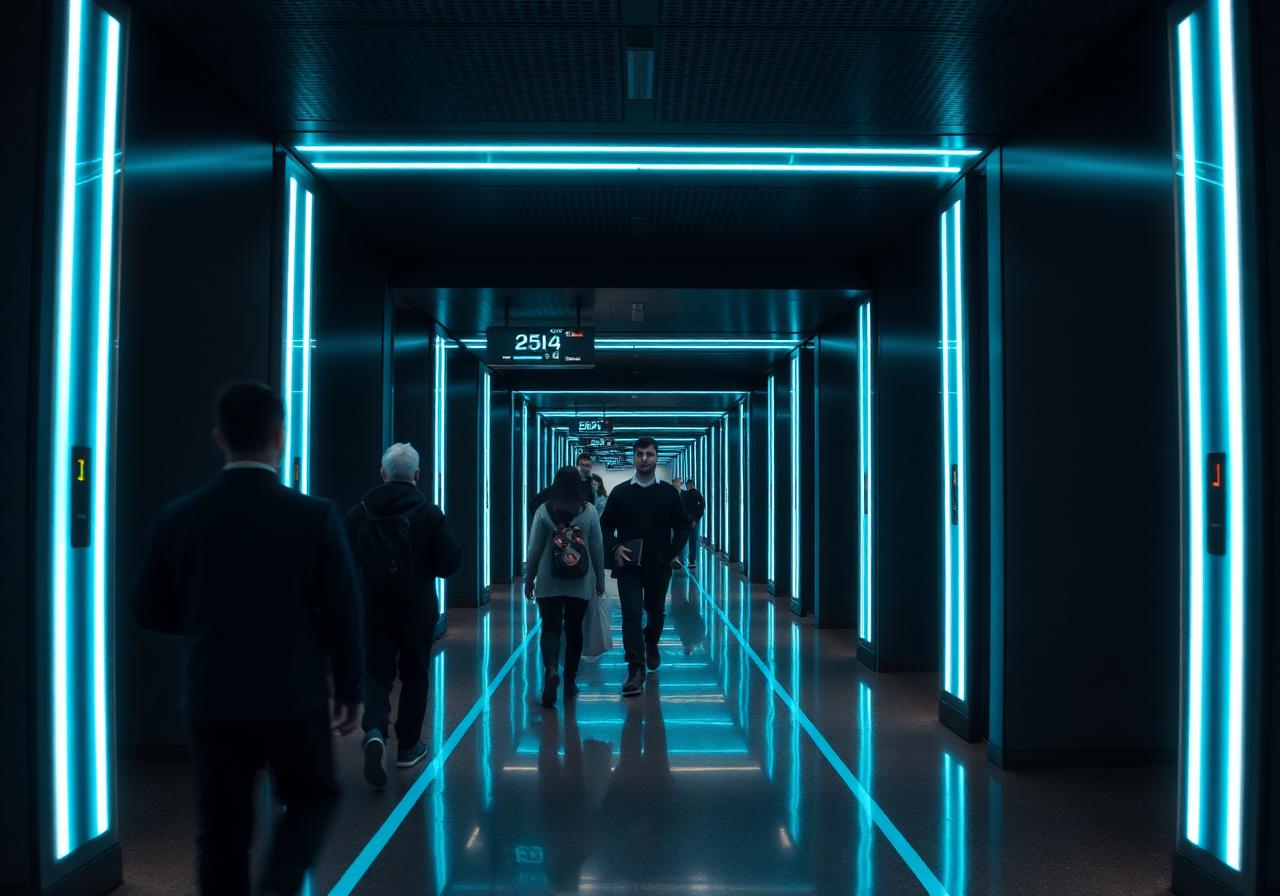
At Changi Terminal 4 you can now walk from curb to gate without showing a passport once. A camera at bag drop captures your face. The same template authenticates you at immigration, at the lounge, at the jet bridge. The physical document stays in your pocket the entire journey.
Singapore is not alone. Helsinki, Dubai, Atlanta, Frankfurt, and Sydney have all rolled out some version of what the industry calls a biometric corridor — a continuous identity layer that replaces the half-dozen manual checks a traveler used to clear between the taxi and the seat. The passport is still legally required. It is just no longer the thing you touch.
The passport is still legally required. It is just no longer the thing you touch.
What is actually happening under the hood
The IATA One ID standard and the ICAO Digital Travel Credential together describe a model where your identity is verified once, cryptographically bound to your trip, and reused at every checkpoint as a one-to-one face match against a template you consented to enrol. Nothing is queried against a public watchlist in the corridor itself — that work happens upstream, before you ever reach the airport.
- Enrolment is increasingly done from a phone the night before, not at a kiosk on arrival.
- Templates are typically held by the airport or airline for the duration of the trip, then discarded — not pooled into a global database.
- The matching itself runs on-device or at the edge in under 300 milliseconds, faster than any human officer can read a stamp.
Why tourism boards care
The economic argument is unglamorous and decisive: a biometric corridor moves roughly three times the passengers per hour through a given footprint of immigration hall. For destinations hitting capacity ceilings during peak season — Reykjavík, Lisbon, Kyoto — that is the difference between turning visitors away and accommodating them without pouring new concrete.
It also changes the arrival experience in a way travelers notice. The first impression of a country shifts from a queue and a stamp to a hallway you walk through. For destinations competing on hospitality, that is not a small thing.
The legitimate worries
Biometric templates are not passwords. You cannot reset your face. A breach of an airline's enrolment database is not the same as a breach of an email list. The EU's recently expanded Entry/Exit System has been criticised for exactly this asymmetry: the data is permanent, the safeguards are policy, and policy changes.
The travelers most exposed are the ones with the least leverage to opt out — transit passengers connecting through a hub whose rules were not chosen by their own government. The best implementations make non-biometric lanes genuinely available, not buried behind a thirty-minute wait designed to nudge you back to the camera.
What to expect by 2027
- Most tier-one hubs will offer end-to-end biometric journeys as the default, with manual lanes preserved by regulation.
- Land borders will lag — the open-air, multi-modal environment is genuinely harder than a terminal.
- Cross-airline trip stitching (your face enrolled at Heathrow working in Singapore) will arrive as a standard, not a bilateral deal.
- Expect at least one high-profile incident — a misidentification, a leak, or a contested deletion request — that reshapes the consent UX industry-wide.
The passport stamp will not disappear overnight; it will simply stop mattering. The interesting question for the next five years is not whether biometric corridors will spread. It is whether the rules around them will be written by the travelers using them, or only by the systems processing them.
About Sophia Goehner
Sophia covers identity infrastructure and the borders we don't see. Based in Ithaca, New York.