
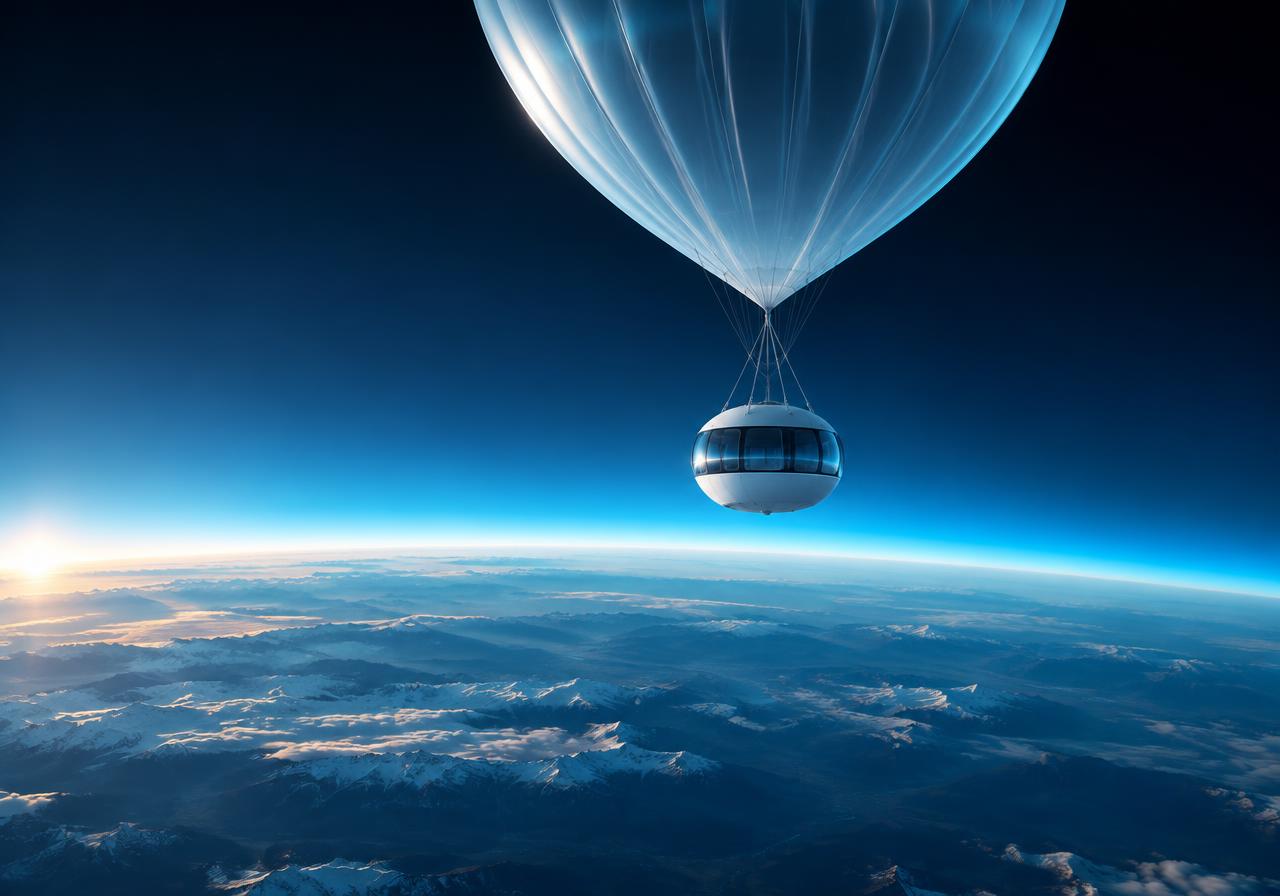
A mission that actually flew
NASA reported completing the Super Pressure Balloon Imaging Telescope mission on May 25, 2023, after approximately 39 days and 14 hours of flight. It launched from Wānaka Airport in New Zealand on April 16. This is evidence of a completed scientific flight, not simply a proposed capability.
According to NASA, the balloon made five circuits around the Southern Hemisphere's mid-latitudes and maintained a float altitude around 108,000 feet. The payload was a telescope. No paying passengers or tourist capsule were part of this mission.
Sources: [1] NASA
Recovery was an operational decision
NASA describes choosing a landing opportunity over southern Argentina and coordinating with Argentine officials. Flight termination separated the balloon from the payload, which descended by parachute to an unpopulated area. The account illustrates how mission planning and recovery are integral to a balloon flight.
The decision also reflected the predicted trajectory and the risk of reduced sunlight for solar-powered systems. That is a concrete constraint, not a guarantee that balloons can fly wherever an itinerary requires. Atmospheric conditions, energy and safe recovery remain part of the operating problem.
Sources: [1] NASA
What it means—and does not mean—for tourism
The connection to tourism is technological, not commercial. SuperBIT shows that a balloon can sustain a scientific payload in the stratosphere. A passenger product must separately demonstrate safe occupancy, life support, emergency procedures, approvals and an actual service offering. A successful telescope mission does not answer those questions.
For travelers, this is a useful evidence boundary: ask for the operator's completed passenger flights and applicable approvals, not just a balloon altitude or attractive cabin design. This case does not verify the parent essay's suggested prices, environmental comparisons or claims of routine passenger availability.
Sources: [1] NASA
What this evidence does not prove
SuperBIT carried scientific equipment, not tourists. Its duration, altitude and recovery do not establish passenger comfort, certification, ticket availability, lifting-gas recovery or lifecycle emissions for tourism balloons.
Primary sources
- [1] NASA Successfully Completes Globetrotting SuperBIT Balloon Flight
NASA · May 25, 2023
Sources researched November 3, 2026. Dated deployment evidence is not a guarantee of today's availability. Operator and vendor reports are attributed; broader implications are analysis.
Related journal essay