Every few years a new mode promises to collapse the map. Most do not survive their first procurement cycle. A few quietly reshape entire regions. Here is a short, opinionated guide to the three modes that are actually shipping infrastructure right now.
Hyperloop: the long bet
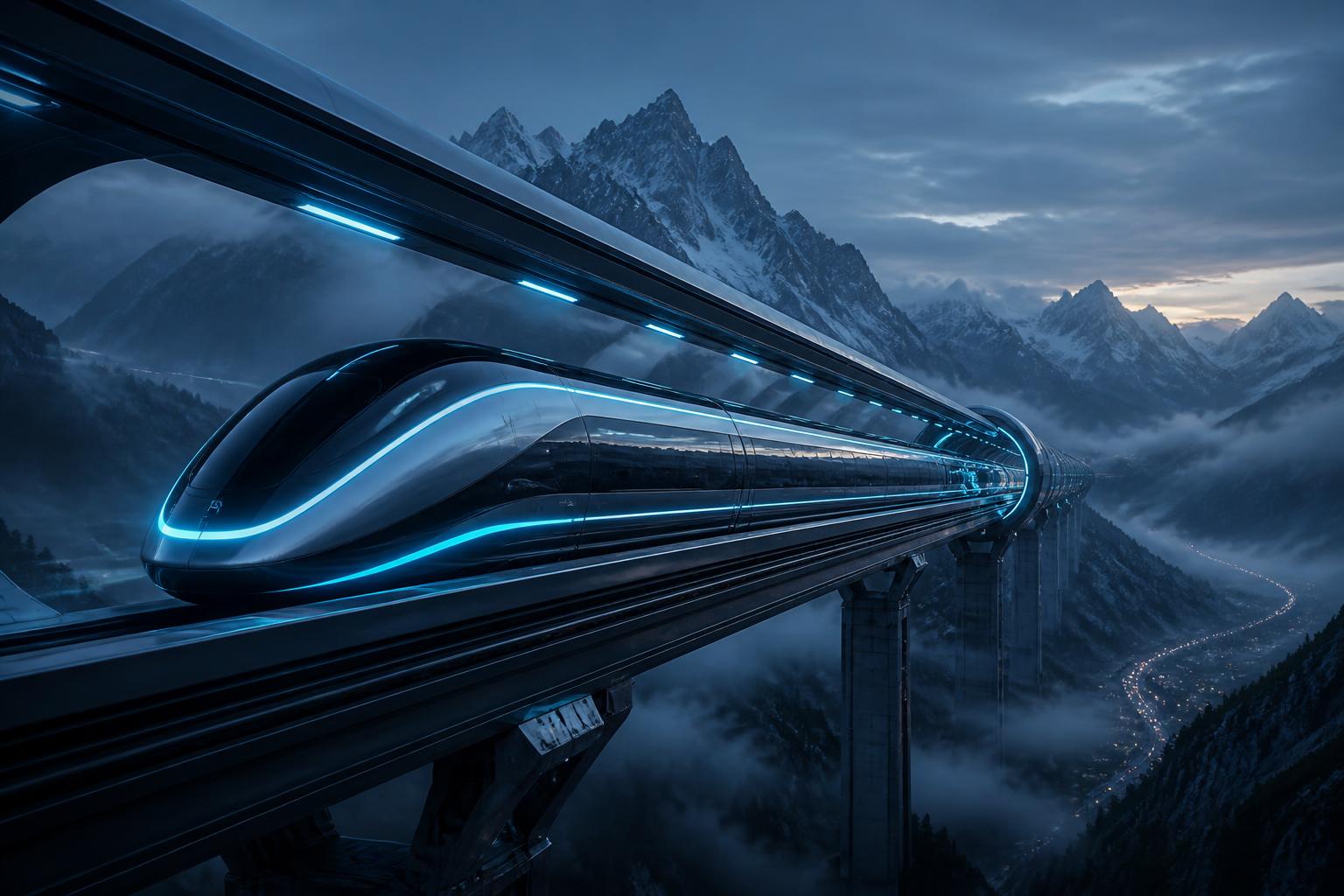
Vacuum-tube transit promises airline speeds at rail energy costs. Test corridors exist; commercial corridors do not. Treat any 2030 timeline as marketing. The real question is whether the first full route will be a freight corridor (likely) or a passenger one (less so).
Maglev: the boring success
Magnetic levitation already moves passengers commercially in Shanghai and Japan, and new lines are under construction. It is expensive per kilometre but mature, quiet, and astonishingly fast. The next decade's story is whether maglev becomes a regional standard or stays a flagship novelty.
eVTOL: the airspace question
Electric vertical takeoff aircraft are the closest to the consumer travel experience. The aircraft are largely certified; the bottleneck is vertiport infrastructure and the air-traffic-control software to choreograph thousands of low-altitude flights without making cities louder. Expect first commercial routes between airports and city centres, not between cities.
Most modes do not survive their first procurement cycle. A few quietly reshape entire regions.
How to read the announcements
- Watch for civil-works permits, not press releases.
- Freight before passengers is a feature, not a failure.
- If the timeline is measured in CGI renders, it is a decade away.
About Sophia Goehner
Sophia writes about networks, mobility, and the spaces in between. Based in Ithaca, New York.