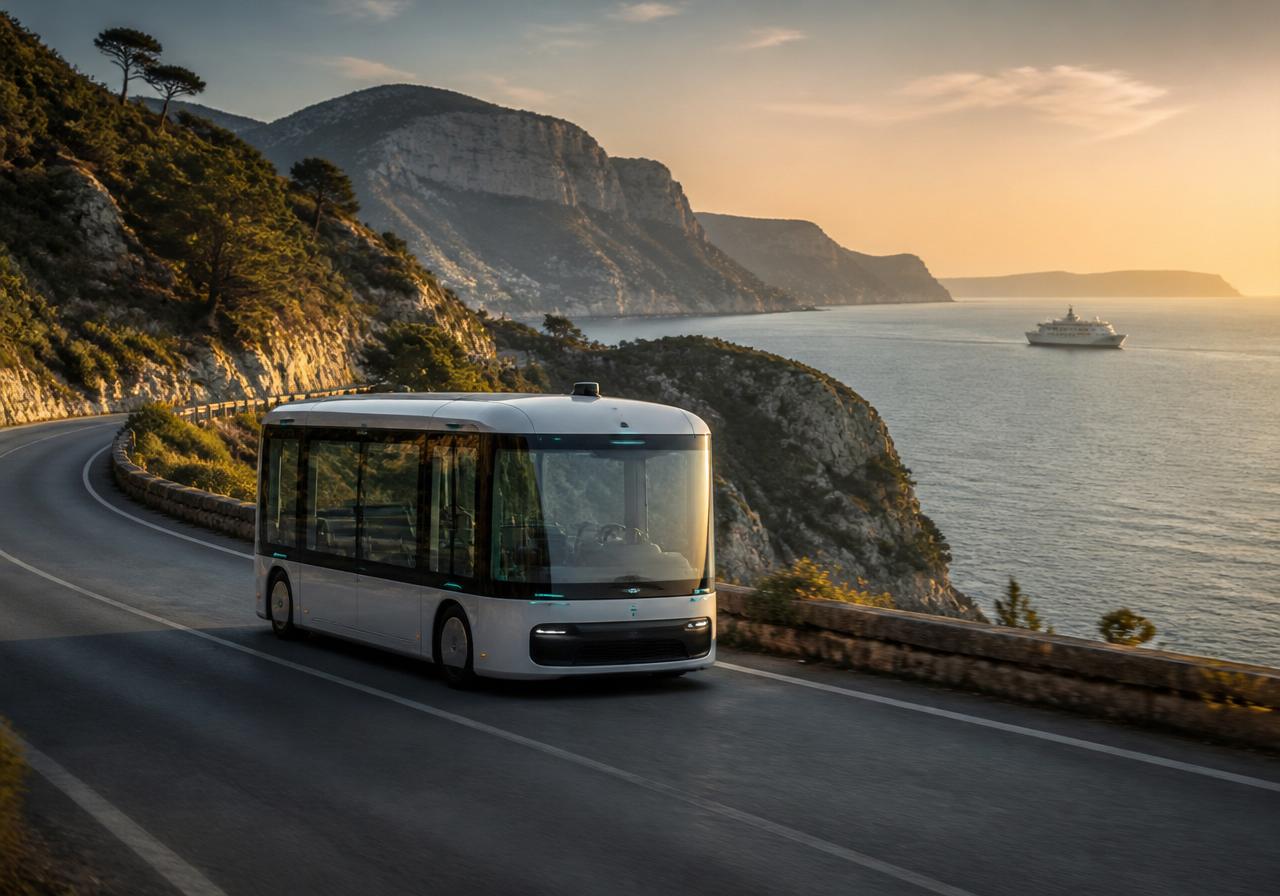
Drive an hour out of any mid-size European airport this spring and you will probably share the road with one: a low, boxy, electric shuttle gliding between a regional airfield and a town whose population doubles in summer. No driver in the front seat. No fanfare on the side.
The robotaxi story has been about dense cities — and has mostly stalled there. The quieter story is about fixed-route, low-speed, low-complexity corridors that turn out to be exactly the conditions today's autonomy stacks can handle reliably.
Why these routes, why now
- Predictable geometry: the same loop, twenty hours a day, all year.
- Low traffic complexity outside peak season — perfect for cautious autonomy.
- A real transport gap: tourism towns underserved by buses, overserved by rental cars and their parking footprint.
- Operators that own the road network end-to-end (airports, ferry ports, resort consortia), which makes pilots faster to greenlight.
The tourism effect
Small towns gain a frequent, affordable connection to the airport without subsidising a half-empty bus. Visitors arrive without a rental car, which immediately reduces parking pressure on historic centres. Hotels start advertising “no car needed” the same way they advertise free Wi-Fi a decade ago.
The robotaxi story stalled in cities. The quieter story is winning on the scenic routes.
What still needs to happen
Regulation remains the rate-limit. Most pilots run under local exemptions that do not yet scale across borders. The shuttles themselves are mature; the legal framework around them is the part still under construction.
About Sophia Goehner
Sophia reports on transportation and the economics of moving people. Based in Ithaca, New York.